
State Farm paid $558 million in Illinois hail claims in 2025 — third-most of any state — and Illinois has logged more than 500 hail reports so far in 2026, fourth-most in the country. That turns impact-resistant shingles from a national trend piece into a local math problem: does the upgrade pay for itself here?
Usually yes, but not for the reason most people assume. Here’s what Class 4 actually survives, what it doesn’t, and how to work out whether it’s worth it on your roof.
Quick answer
To earn a UL 2218 Class 4 rating, a shingle has to take a 2-inch steel ball dropped twice from 20 feet onto the same spot without cracking or tearing its backing. Most major carriers writing in Illinois offer a premium discount for Class 4 — commonly cited in the range of 10–28% — which is what usually justifies the upgrade rather than the hail protection alone. Class 4 is not hail-proof: 2-inch-plus stones can still bruise it.
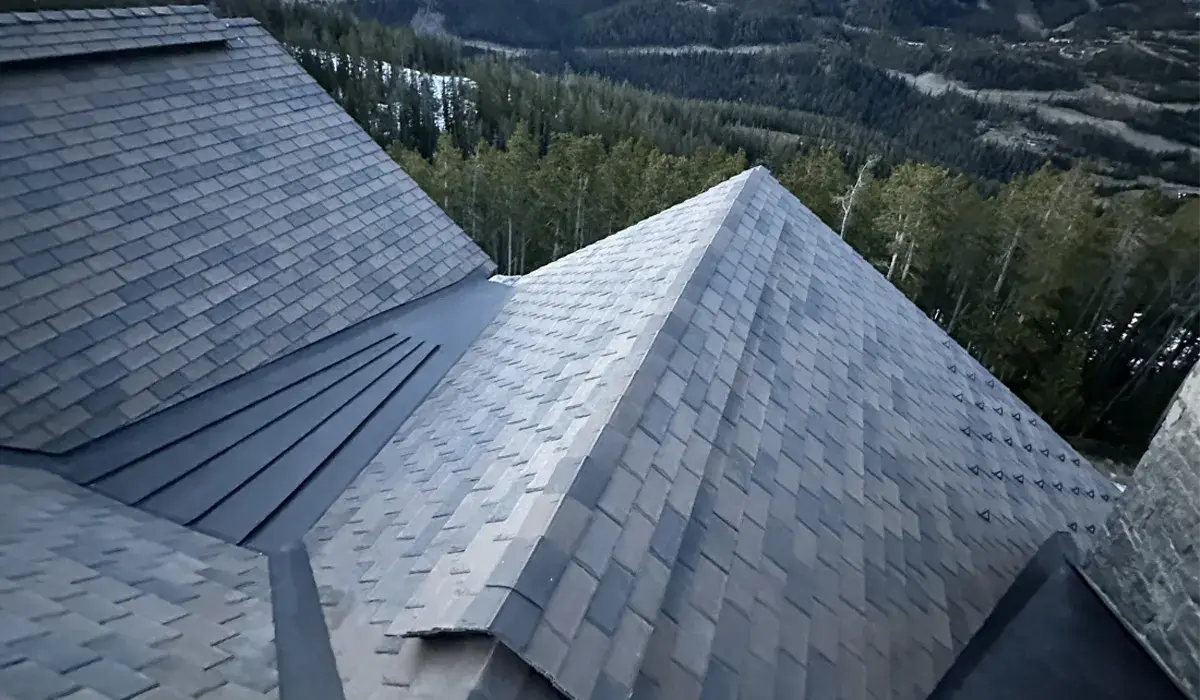
What "Class 4" actually means
It’s a test result, not a marketing term. UL 2218 rates roofing by impact resistance in four classes, and Class 4 is the top one.
The test: a 2-inch steel ball is dropped from 20 feet onto the same spot on the shingle, twice. To pass, the shingle must show no cracking or tearing of the backing. That’s a meaningful amount of energy — roughly what the hail that totals ordinary roofs delivers.
Note what the test measures: whether the shingle’s structure survives. Not whether it looks perfect afterward.
How they're built differently
The technology doing the work is SBS-modified bitumen — styrene-butadiene-styrene, a rubberized asphalt compound.
An ordinary asphalt shingle is comparatively rigid. Hit it hard enough and it fractures. An SBS-modified shingle is flexible: it deforms on impact, absorbs the energy, and returns to shape. The difference is a windshield versus a tennis ball.
That flexibility is also why SBS shingles handle Illinois freeze-thaw cycling well — the same property that resists impact resists the brittleness that comes with cold.
A standard shingle resists hail by being hard. A Class 4 shingle resists it by being flexible. In a freeze-thaw climate, flexible wins twice.

The insurance discount — usually the real reason
This is where the decision gets made, and it’s worth being straight about it.
Most major carriers writing in Illinois offer a premium discount for a Class 4 roof. Figures commonly cited in the industry run from about 10% to 28% off the premium, and at the upper end that can recover the upgrade cost within the first decade of ownership.
But the range is wide and carrier-specific, so treat those numbers as a reason to ask rather than an answer. The sequence that actually works:
- Call your agent before choosing shingles. Ask specifically: “What is my discount for a UL 2218 Class 4 roof?” Get it in writing.
- Get the upgrade quoted as a line item against standard architectural shingles.
- Divide the upgrade cost by the annual saving. That’s your payback period, using your carrier’s real number instead of a range from an article.
- Ask about documentation. Carriers typically want the manufacturer’s certification for the specific product installed — keep it with your policy.
There’s a second insurance angle worth connecting. Carriers have been moving older roofs to actual cash value coverage and adding percentage-based wind and hail deductibles — we covered that in the 15-year roof rule. If you’re replacing a roof anyway because of that shift, the Class 4 decision is already on the table.
What Class 4 does not do
Here’s where we’d rather be honest than persuasive.
- It isn’t hail-proof. Class 4 resists the small-to-medium hail that damages standard architectural shingles. Stones of 2 inches and up can still bruise it.
- It doesn’t stop cosmetic marking. Dents and scuffs can still appear — and carriers are increasingly excluding cosmetic damage from coverage anyway.
- It doesn’t protect anything else. Your gutters, vents, siding, AC condenser, and skylights take hail exactly as before.
- It doesn’t extend the warranty by default. Class 4 is an impact rating, not a longevity rating — check the actual product warranty.
- It doesn’t fix a bad installation. A premium shingle over failed flashing still leaks at the flashing.
Anyone selling Class 4 as hail immunity is overselling it. What it genuinely buys is a roof that survives the storms that would otherwise cost you a claim, a deductible, and five to fifteen years of roof life.

When it's worth it — and when it isn't
Worth it when…
Harder to justify when…
Your carrier offers a real discount and you'll own the house long enough to bank it
Your carrier offers little or no credit
You're replacing the roof anyway
The current roof has years left — don't tear off a sound roof for this
You've already had one hail claim
You're selling within a couple of years
You have a percentage-based wind/hail deductible
Budget is tight and the money is better spent on ventilation or flashing
You're in the hail corridors — DuPage, west and northwest suburbs
The roof is slate, tile, or copper — those already outperform Class 4 asphalt
General decision framework. Your carrier’s actual credit and your roof’s actual condition decide it — both need checking before you commit.
The honest summary: if you’re replacing a roof in Illinois in 2026 and your carrier gives a meaningful credit, Class 4 is usually the right spec. If your roof is sound, the answer is to keep it and revisit this when replacement is genuinely due. We’ll tell you which of those you’re in.
Replacing a roof and weighing the upgrade?
We’ll assess what your roof actually needs and quote Class 4 as a line item so you can do the math — no upsells.

The bottom line
In a state that ranks in the national top five for hail year after year, impact-resistant shingles are a reasonable default on any new asphalt roof — provided your carrier pays you for it. Make the call with your agent’s actual number, not a range from the internet, and don’t accept “hail-proof” from anyone.
Black Square Roofing & Exterior has installed asphalt shingle and replacement roofs across Arlington Heights and the northwest suburbs since 2007. Not a storm chaser. Not a franchise. We’ll tell you straight whether you need a new roof at all. Related: telling hail damage from normal wear.
Frequently asked questions
Are Class 4 impact-resistant shingles worth it in Illinois?
What does UL 2218 Class 4 mean?
Are Class 4 shingles hail-proof?
How much do impact-resistant shingles cost extra?
It varies by manufacturer and product line, so the useful approach is to have it quoted as a line item against standard architectural shingles on your own roof rather than relying on a general figure. Then ask your insurer for your Class 4 discount in writing and divide the upgrade cost by the annual saving — that gives you a real payback period for your house and your carrier.
What makes impact-resistant shingles different?
SBS-modified bitumen — styrene-butadiene-styrene, a rubberized asphalt compound. Standard shingles are comparatively rigid and fracture under hard impact, while SBS-modified shingles flex, absorb the energy, and return to shape. That same flexibility helps them handle Illinois freeze-thaw cycling, since the property that resists impact also resists cold-weather brittleness.
The Class 4 test description reflects the UL 2218 impact resistance standard. Insurance discount ranges and Illinois carrier practice reflect 2026 industry reporting from independent roofing sources and are general figures — discounts vary by carrier and policy, and your agent is the authority on your own credit. Illinois hail claim figures are State Farm’s published data; hail report counts are from the NOAA Storm Prediction Center.