
Most homeowners can’t tell hail damage from ordinary wear, and that’s not a failure of attention — the most consequential hail damage is genuinely invisible from the ground, and sometimes invisible from the roof. Meanwhile the things that look alarming from the driveway are often just a roof getting older.
Here’s how the two actually differ, what size hail does real damage, and what to do with the answer.
Quick answer
Hail damage is random and scattered — dark bruised spots where granules were knocked off, dents in soft metal, and impact marks with no directional pattern. Normal wear is uniform and predictable — curling at the edges, even granule loss across whole slopes, worst on the sun-facing sides. Hail around 1 inch starts marking asphalt shingles; 1.5 inches and up typically causes claim-worthy damage. The most serious form, a bruise that breaks the mat beneath the surface, can’t be seen from the ground.
What hail damage looks like
The signature of hail is randomness. It falls where it falls, so the damage has no pattern, no direction, and no relationship to the age of the roof.
- Bruises. Soft, dark spots where the granule surface was knocked away, exposing the black mat underneath. They feel slightly tender underfoot, like a bruise on fruit — which is where the name comes from.
- Random scatter. Marks distributed unevenly across a slope, not lined up with the shingle courses.
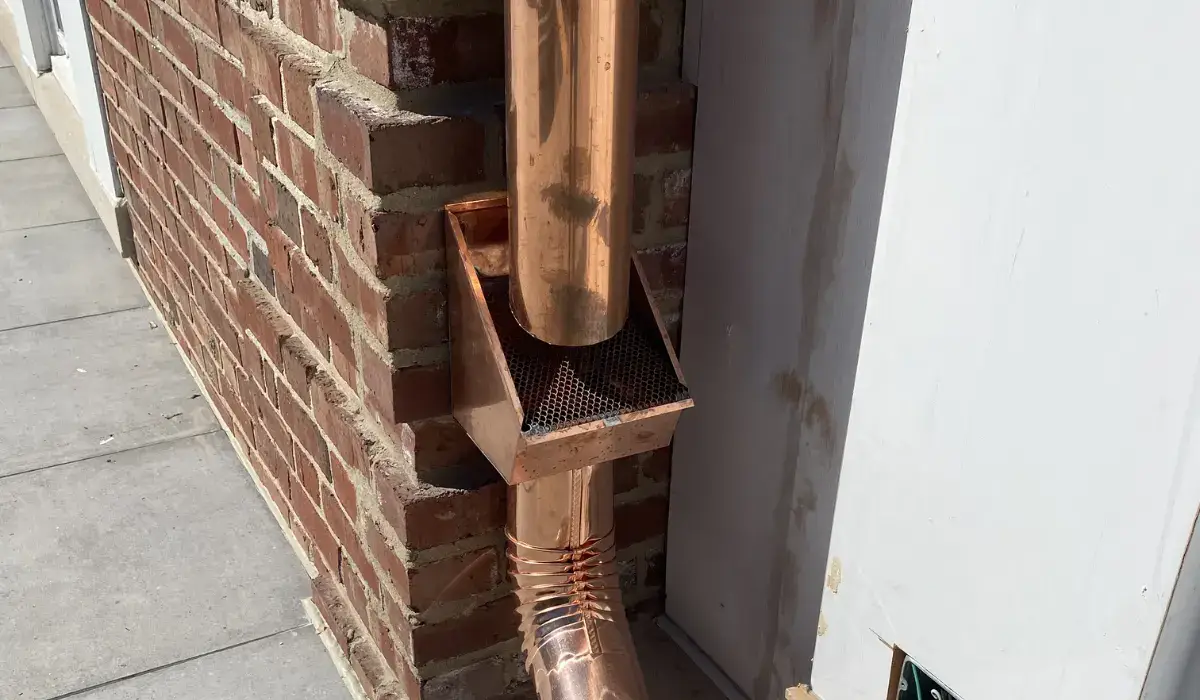
- Dents in soft metal. This is the honest tell. Check the gutters, downspouts, vents, valley metal, and any aluminum trim — also the AC condenser fins, mailbox, and grill lid. Metal records the storm reliably, and it’s all visible from the ground.
- Cracked or split shingles with sharp, fresh edges rather than weathered ones.
Spatter marks — clean spots on dirty surfaces where hail struck and washed the grime off. - Fresh granules in the gutters after a storm, distinct from the slow shedding of an aging roof.
What normal wear looks like
Aging is the opposite of random. It’s uniform, gradual, and predictable — and it follows the sun.
- Curling, cupping, or clawing at the shingle edges — the classic end-of-life sign, and never caused by hail.
- Even granule loss across a whole slope rather than in spots, usually worst on the south- and west-facing sides.
- Uniform fading and a thinning, threadbare look.
- Cracking along the courses, in straight lines that follow the shingle layout.
- Brittleness. Old shingles snap; newer ones flex.
- Nail pops and lifted tabs from years of thermal movement.
Hail is random. Wear is uniform and follows the sun. If the damage lines up neatly with the shingle courses, hail didn't do it.

What size hail actually damages a roof
Hail size
Comparable to
Typical effect on asphalt shingles
Under 1"
Pea to marble
Rarely functional damage; may dent soft metal
1" – 1.25"
Quarter to half dollar
Begins marking and bruising shingles
1.5" – 1.75"
Walnut to golf ball
Commonly claim-worthy; replacement often needed
2"+
Egg to baseball
Widespread damage; even Class 4 shingles can bruise
External industry guidance for general orientation. Actual damage depends on hail density, wind speed, impact angle, shingle age, and shingle type — a roof can be damaged below these thresholds and survive above them.
Wind matters as much as size. Hail driven sideways at 70 mph does more than the same stone falling straight down, which is why storms combining hail and high wind are the ones that total roofs.
The damage you can't see — and why it matters most
This is the part worth understanding, because it’s where homeowners lose money.
A hailstone can strike hard enough to fracture the fiberglass mat inside the shingle without breaking the surface. From the driveway, that roof looks fine. From the roof, it looks nearly fine. But the shingle’s structure is compromised, and water will find it — in two years, or five.
Industry sources describe this bruising as shortening a roof’s remaining life by 5 to 15 years, and it’s cited as the most common form of compensable hail damage in Illinois claims. It’s found by hand, by someone pressing on suspect spots and feeling for the give.
Which is the practical argument for having a roof looked at after a significant storm even when it looks untouched. “It looks fine” and “it is fine” are different statements about a hail-struck roof.

Why this keeps coming up in Illinois
Because 2026 was an extraordinary year for it. Illinois recorded 411 hail reports — more than any state but Texas and Missouri.
- March: baseball-sized hail across DuPage County, including a 4.8-inch stone documented in Darien.
- Late July: hail to 2.25 inches and winds to 95 mph from Carpentersville and Elgin through Orland Park and Tinley Park — with 2.5-inch hail in Westmont and reports from Clarendon Hills, Downers Grove, Lisle, Darien, and Naperville, plus 60–80 mph straight-line winds along the I-355 corridor.
A lot of roofs in the northwest and western suburbs took hits this year that nobody has looked at yet. And claim windows are finite — commonly one year from the date of the storm, though it varies by policy — so a roof struck in July has a deadline attached to it even if the ceiling is still dry.
What to do — in order
- Check the metal from the ground. Gutters, downspouts, vents, AC condenser, mailbox. Dents there mean the hail was big enough to reach the roof.
- Look in the gutters for a fresh load of granules.
- Walk the interior. New ceiling stains, and the attic if it’s accessible.
- Photograph everything, dated — including a shot with something of known size next to a dent for scale.
- Get a professional inspection if the metal is dented or the storm was significant. Bruising isn’t a DIY diagnosis.
- Stay off the roof. Walking a hail-struck roof creates damage that looks like storm damage and complicates everything afterward — and people get hurt doing it.
Two honest notes. First, our role: we inspect, we document what we find, and we give you the paperwork. The claim is between you and your insurer — anyone promising an approval is selling something they don’t control. Second: if we look at your roof and the damage is ordinary wear rather than hail, we’ll say that. Calling old shingles a hail claim isn’t a favor to anyone.
Storm went through and you're not sure?
We’ll inspect the roof, check for bruising by hand, and document the condition in writing — no upsells.

The bottom line
Hail damage is random, scattered, and often invisible. Wear is uniform, gradual, and follows the sun. If your soft metal is dented, the hail was big enough to matter — and the roof deserves a real look, not a squint from the driveway.
Black Square has inspected and repaired roofs across Arlington Heights and the northwest suburbs since 2007. We find the root cause — no guesswork. Not a storm chaser. Not a franchise. Owner on every project. Also worth reading: the signs a roof needs full replacement.
Frequently asked questions
How can I tell if my roof has hail damage?
Look for randomness. Hail leaves scattered dark bruises where granules were knocked off, dents in soft metal like gutters and vents, cracked shingles with fresh edges, and a load of granules in the gutters after a storm. Normal wear looks uniform instead — curling edges, even fading, and the worst wear on sun-facing slopes. The easiest ground-level check is the metal: dented gutters, downspouts, or AC condenser fins mean the hail was large enough to reach the roof.
What size hail damages a roof?
Hail around 1 inch — roughly a quarter — begins marking and bruising asphalt shingles. At 1.5 inches and larger, damage is commonly claim-worthy and replacement is often needed. Above 2 inches, damage is widespread and even impact-rated shingles can bruise. Wind matters as much as size: hail driven sideways at high speed does far more than the same stone falling straight down.
Can hail damage a roof without causing a leak?
Yes, and that’s the most important thing to understand about it. A hailstone can fracture the fiberglass mat inside a shingle without breaking the surface, leaving a roof that looks fine but has lost years of life — industry sources put it at 5 to 15 years. That bruising is found by hand, by someone pressing on suspect areas, which is why a post-storm inspection is worth doing on a roof that appears undamaged.
How long do I have to file a hail damage claim in Illinois?
Filing windows are commonly one year from the date of the storm, but they vary by policy — read yours or ask your agent, because that date is firm. A practical consequence is that roofs hit during the 2026 storms have deadlines attached even if no leak has appeared. Documenting the damage with dated photos as early as possible is what makes the timeline manageable.
Should I get on my roof to check for hail damage?
No. Walking a hail-struck roof creates scuffing and granule loss that resembles storm damage and muddies any later assessment, and roof falls injure people every year. Everything a homeowner usefully needs to check is visible from the ground — dented metal, granules in the gutters — plus new stains on interior ceilings. Leave the surface inspection to someone with the equipment for it.
Illinois 2026 hail data and storm details reflect reporting from independent Chicago-area roofing and restoration sources, consistent across multiple outlets. Hail size thresholds and bruising lifespan figures are general industry guidance — your roof’s condition depends on an on-site assessment. Insurance timelines and coverage vary by policy; this is general information, not insurance advice.