
The economics of residential solar changed on January 1, 2026, and a lot of the advice still circulating hasn’t caught up. The 30% federal tax credit for homeowner-owned systems is gone. That doesn’t make solar shingles a bad idea in Chicago — but it changes the math enough that you should redo it.
Here’s the honest version, from a roofer who doesn’t sell solar.
Quick answer
Solar shingles integrate photovoltaic cells into the roof surface instead of mounting racked panels on top. They look far better and cost more per watt than conventional panels. The federal Residential Clean Energy Credit (Section 25D) was eliminated for systems placed in service after December 31, 2025, so the 30% credit is no longer available on an owned system. Illinois Shines SREC payments are still active and remain the largest incentive for Illinois homeowners. Before any of that matters, your roof has to be new enough to outlive the array.
What solar shingles are
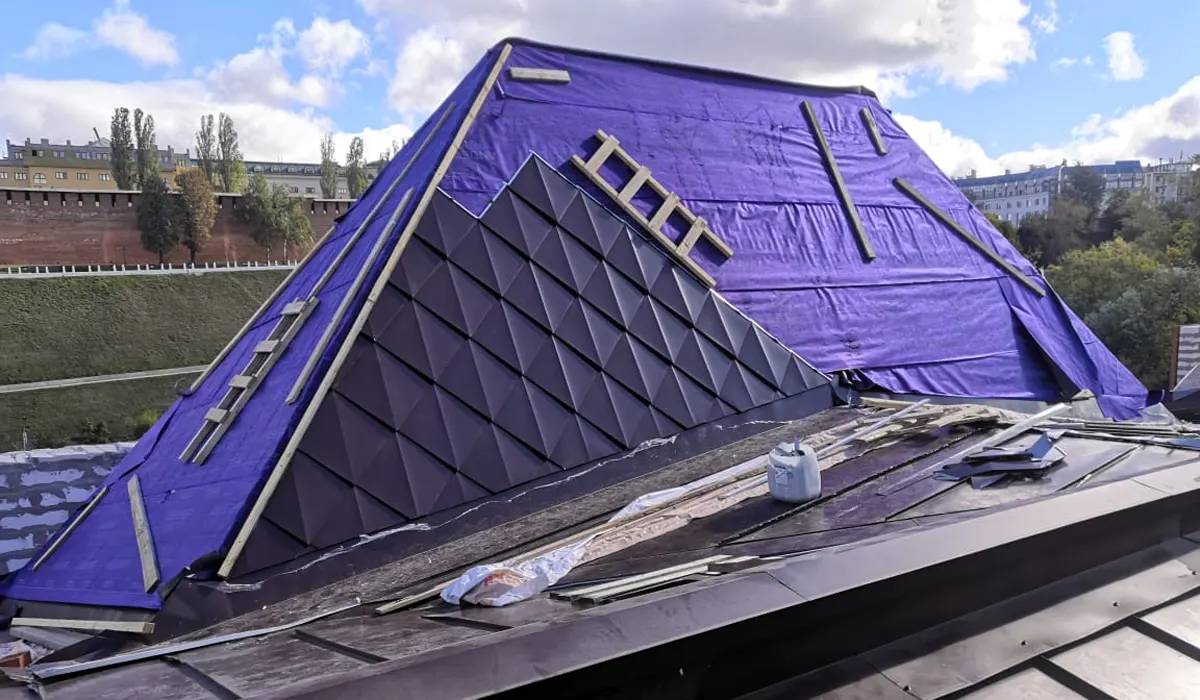
Solar shingles — sometimes called building-integrated photovoltaics — put the solar cells in the roofing material rather than on a rack above it. They install in courses like conventional shingles and lie flat to the roof plane.
The appeal is entirely aesthetic and architectural: no rails, no standoffs, no panels floating six inches off the surface. On a house where a racked array would look wrong — a period home, an HOA with appearance rules, a prominent street-facing slope — that matters.
The trade-off is equally real. Per watt of generation, integrated products cost more than conventional panels, and because they sit flat to the roof they can’t be tilted toward the optimal angle or ventilated as freely behind, which affects output.
What changed on January 1, 2026
This is the part worth getting right, because it’s the difference between a good decision and a bad one.
The federal Residential Clean Energy Credit — Section 25D, the 30% credit — was eliminated by the One Big Beautiful Bill Act. It is not available for residential systems placed in service after December 31, 2025. If you read an article promising 30% back on a home solar installation, check its date.
One nuance survives: on a leased system, the installer may still claim the commercial investment tax credit through 2027 and pass some of that value through in the lease terms. That’s a different ownership structure with different long-term economics — worth understanding before assuming a lease is simply cheaper.
Most solar content online still quotes the 30% federal credit. For an owned residential system in 2026, it isn't there. Redo the math before you sign anything.

What Illinois still pays
Illinois remains one of the better states for residential solar incentives, and the state program is now the main event rather than a bonus.
Illinois Shines — the Adjustable Block Program — buys the renewable energy credits your system produces over 15 years. Published summaries put the upfront value at roughly 25–40% of a typical residential system’s cost, with about half the REC value paid in the first year after installation and the balance in quarterly installments over the following years.
Two practical cautions:
- Block capacity and pricing change. The program allocates in blocks, and values shift as blocks fill. Check the program’s own project status and capacity dashboard at illinoisshines.com rather than trusting a figure in any article, including this one.
- Net metering terms matter as much as the incentive. How your utility credits exported power over the system’s life affects the return more than the upfront payment does.
The Chicago-specific reality
Solar works here. It works less well than the marketing implies, and the difference is worth knowing:
- Roughly 190 sunny days a year in this region, and winter production drops sharply — short days, low sun angle, and overcast weeks in a row.
- Snow cover stops production entirely while it sits. Integrated shingles lie flat to the roof, so they shed snow more slowly than tilted panels do.
- Orientation is decisive. South-facing slopes perform; north-facing slopes may not justify the investment at all. An east-west split changes the answer completely.
- Shading is decisive too. Mature trees are common in these suburbs and are wonderful for everything except photovoltaics.
- Freeze-thaw cycling is hard on any roof assembly with penetrations and edges — which is a roofing consideration, and our actual subject.

The roof questions to settle first
This is where we can actually help, and where homeowners most often get it wrong.
A solar array should never go on a roof that will need replacing before the array does. Solar equipment is warranted for decades. If your asphalt shingles have eight years left, you are scheduling a costly removal-and-reinstall — paying to take the system off, replace the roof, and put it back.
Settle these before a solar contractor gets on the roof:
- How old is the roof, honestly? Architectural asphalt runs 20–30 years in Illinois. If you’re past 15, replace before you add solar. Our guide to how often roofs need replacing here covers the timeline.
- Is the deck sound? Sheathing has to carry the added load and hold fasteners properly. Soft or rotted decking is a stop.
- Is the attic properly ventilated? Covering roof area changes how the assembly breathes. A ventilation problem gets worse under an array, not better.
- Who is responsible for the penetrations? Every mount and conduit run is a hole in your roof. Ask specifically how they’ll be flashed — and who warrants a leak at one of them, the roofer or the solar installer. Get that in writing before work starts.
- What happens to your roof warranty? Some manufacturer warranties are affected by third-party penetrations. Check before, not after.
To be clear about our role: we don’t sell or install solar. We’re the people who tell you whether your roof is ready for it, replace it if it isn’t, and flash the details properly. If a solar salesperson tells you a 17-year-old roof is fine to build on, get a second opinion from someone with no stake in the array.
Considering solar on an older roof?
We’ll tell you how much life your roof actually has left — before you build something on top of it.

So — worth it?
Solar shingles make sense when…
Think harder when…
Appearance genuinely matters — period home, HOA rules, prominent slope
Cost per watt is the priority — conventional panels win on that
Your roof is due for replacement anyway
Your roof has 8–15 years left and is otherwise sound
You have good south-facing, unshaded roof area
The usable slopes face north, or mature trees shade them
You'll own the house long enough to see the payback
You may sell within a few years
You've confirmed your Illinois Shines block and net metering terms
Your quote still assumes the 30% federal credit
General framework. Actual returns depend on your roof’s orientation and shading, current Illinois Shines values, your utility’s net metering terms, and your own quotes.
The bottom line
Solar shingles are a legitimate product that looks far better than racked panels and costs more per watt. In 2026 the federal credit is gone for owned systems, Illinois Shines is doing the heavy lifting, and the single most expensive mistake available is putting a 30-year array on a roof with 8 years left.
Get the roof settled first. Black Square Roofing & Exterior has assessed and replaced roofs across Arlington Heights and the northwest suburbs since 2007, and we have no stake in whether you go solar — which is exactly why the answer we give you is worth having. Owner on every project. No upsells.
Frequently asked questions
Is there still a federal tax credit for solar in 2026?
Not for homeowner-owned residential systems. The federal Residential Clean Energy Credit under Section 25D — the 30% credit — was eliminated by the One Big Beautiful Bill Act and is unavailable for systems placed in service after December 31, 2025. Leased systems are treated differently: the installer may still claim the commercial investment tax credit through 2027 and pass some value through the lease. Much of the solar content online hasn’t been updated for this, so check dates.
Are solar shingles worth it in Chicago?
They can be, if appearance matters to you and your roof has good south-facing, unshaded area. The region gets roughly 190 sunny days a year with sharply lower winter production, and because integrated shingles lie flat to the roof they shed snow more slowly than tilted panels. With the federal credit gone, Illinois Shines SREC payments are now the main incentive, so confirm current block values before running your numbers.
Should I replace my roof before installing solar?
If the roof is past about 15 years, yes. Solar equipment is warranted for decades, so putting an array on a roof with under a decade left means paying later to remove the system, replace the roof, and reinstall it. Architectural asphalt lasts 20 to 30 years in Illinois — have the roof assessed for remaining life, deck soundness, and attic ventilation before any array is designed.
Do solar shingles cause roof leaks?
Any roof-mounted system adds penetrations, and penetrations are where roofs leak — so the flashing detail at each mount and conduit run is what determines the outcome. The question to settle in writing before work begins is who warrants a leak at a penetration: the roofing contractor or the solar installer. Where that responsibility is left vague, homeowners end up between two companies pointing at each other.
What incentives are left for solar in Illinois?
Illinois Shines, the Adjustable Block Program, remains active and buys your system’s renewable energy credits over 15 years — published summaries put its upfront value at roughly 25 to 40% of a typical residential system’s cost, with about half paid in the first year. Because the program allocates in blocks whose values change as they fill, check the current status on the program’s own capacity dashboard rather than relying on a figure quoted in an article.
Federal tax credit status reflects the termination of Section 25D under the One Big Beautiful Bill Act, as reported by independent solar industry sources in 2026. Illinois Shines figures are published program summaries — block values and capacity change, so verify current status at illinoisshines.com. This is general information, not tax, legal, or financial advice; consult a qualified tax professional about your own situation. Black Square Roofing does not sell or install solar equipment.