
Short answer: most Illinois homes with asphalt shingles need a new roof every 20 to 30 years — often closer to 20–25 given our freeze-thaw winters. Metal, tile, slate, and copper last far longer. But age is only half the story: the real rule is to replace when your roof reaches the end of its life or starts showing failure signs, whichever comes first.
Roofs don’t fail on a schedule. Two identical houses built the same year can need new roofs a decade apart, depending on material, ventilation, and how many storms they’ve weathered. Here’s how long each roof type really lasts in Illinois, what shortens it, and how to tell when it’s time.
Quick answer
Plan on replacing an asphalt roof about every 20–30 years in Illinois (architectural shingles), sooner for basic 3-tab. Metal lasts 40–70 years, slate and copper 75–100+. Replace early if you see curling, bald spots, leaks, or sagging — those override the age estimate.
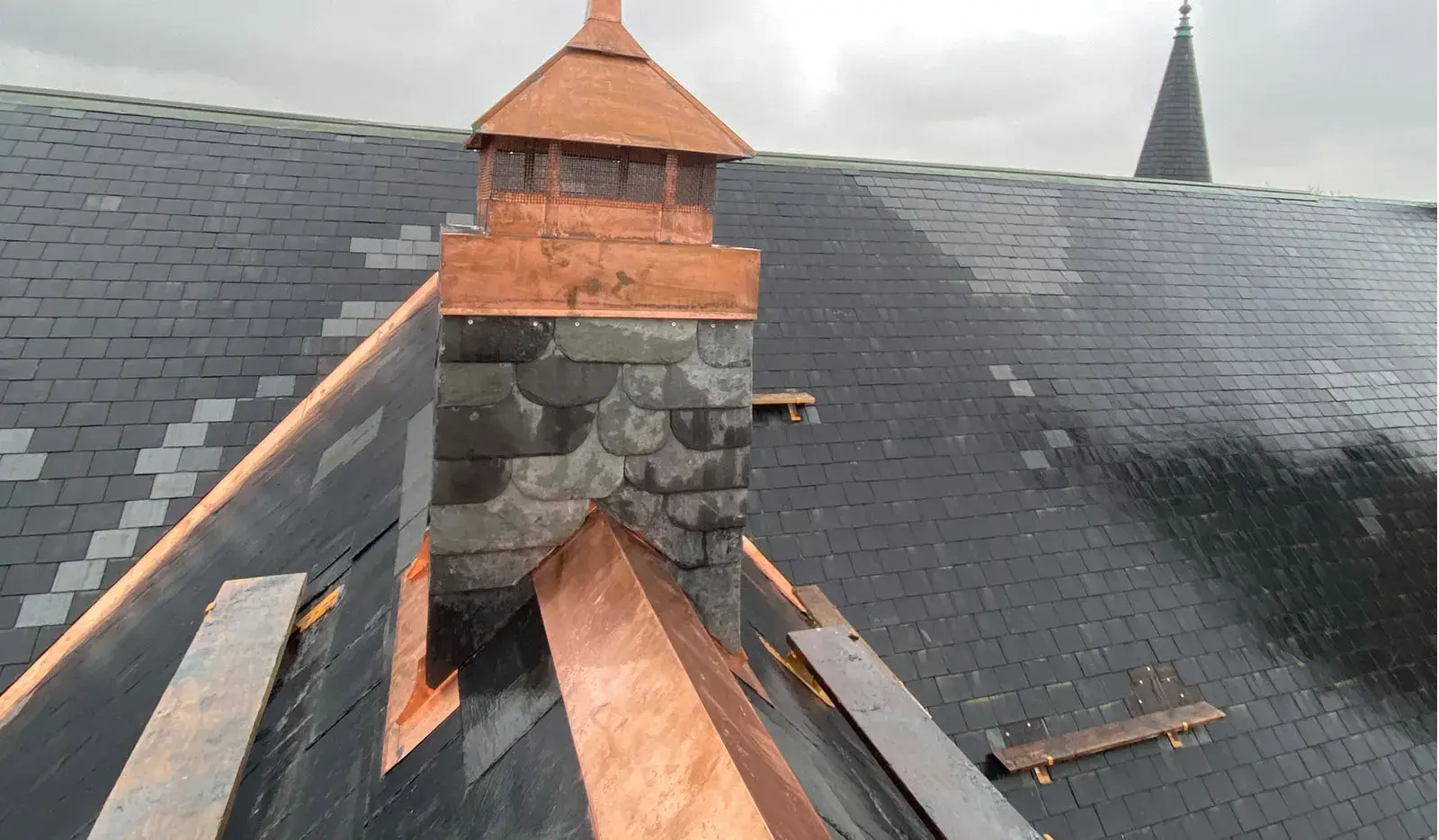
How long each roofing material lasts
Material is the biggest factor in how often you’ll replace. Here’s the realistic lifespan of the common options in the Illinois climate:
Material
Typical lifespan
Replace about every…
3-tab asphalt shingles
15–20 years
~15–20 years
Architectural asphalt
20–30 years
~20–25 years
Standing seam metal
40–70 years
Often once per lifetime
Clay / concrete tile
50–100 years
Rarely
Slate
75–100+ years
Generational
Copper
100+ years
Generational
Industry lifespan ranges (2025–2026), consistent with our materials guide. Real-world life depends on ventilation, install quality, and weather exposure.
Most Illinois homes are on architectural asphalt, so the practical answer for the majority of homeowners is every 20 to 25 years. If you invested in metal, slate, or copper, you may never replace it — you’ll pass it to the next owner. We compare these options in depth in our best roofing materials guide.
Why Illinois roofs often don't hit the high end
Those ranges assume good conditions. A few things common here push asphalt toward the lower end of its lifespan:
- Freeze-thaw cycling — our winters repeatedly expand and contract the shingles and roof deck, gradually weakening the whole system and wearing away the protective granules.
- Poor attic ventilation — this is the big one. Without balanced intake and exhaust airflow, trapped attic heat “cooks” the shingles from below, causing early curling, cracking, and granule loss. A badly ventilated roof can drop to just 15–20 years.
- Storms — hail and high winds age a roof faster and can cut its life short in a single event.
- Sun exposure — south- and west-facing slopes take more UV and often wear out first.
Ventilation quietly decides how long your roof lasts. Two identical roofs can be a decade apart in lifespan — and the attic is usually why.

Signs it's time to replace — regardless of age
The calendar is a guideline; your roof’s condition is the truth. Replace (or at least get it inspected now) if you see:
- Curling, cupping, or clawing shingles — the material is past its prime.
- Bald spots / granules in the gutters — the shingles are shedding their protective layer.
- Active leaks or water stains on ceilings or in the attic.
- Daylight through the roof boards, or a soft, spongy, or sagging deck.
- Widespread missing or cracked shingles after storms.
- Moss or mold holding moisture against the surface.
Any of these can mean replacement is due even if the roof is younger than its rated life. We cover this in detail in our guide to the 6 signs your roof needs a full replacement.
Age isn't the only clock — get it inspected
Here’s the honest, practical approach: once an asphalt roof passes about 15 years, and after any major storm, have it professionally inspected. An inspection catches worn flashing, early granule loss, and small problems while they’re still cheap repairs — and tells you whether you’ve got years left or should start planning.
And to be clear: age alone isn’t a reason to tear off a healthy roof. If your 22-year-old roof is sound and well-ventilated, a good roofer will tell you to keep it and re-check next year — not sell you a replacement you don’t need yet. We’ll tell you straight whether it’s a repair, a watch-and-wait, or a replacement.

Age isn't the only clock — get it inspected
Here’s the honest, practical approach: once an asphalt roof passes about 15 years, and after any major storm, have it professionally inspected. An inspection catches worn flashing, early granule loss, and small problems while they’re still cheap repairs — and tells you whether you’ve got years left or should start planning.
And to be clear: age alone isn’t a reason to tear off a healthy roof. If your 22-year-old roof is sound and well-ventilated, a good roofer will tell you to keep it and re-check next year — not sell you a replacement you don’t need yet. We’ll tell you straight whether it’s a repair, a watch-and-wait, or a replacement.
How to make your roof last longer
You can genuinely add years to a roof’s life:
- Fix attic ventilation and insulation — the single highest-leverage thing you can do.
- Keep gutters clear so water drains instead of backing up under the shingles.
- Handle small repairs promptly — a loose shingle or cracked flashing is cheap now, expensive after it leaks.
- Get periodic inspections, especially after storms.

The bottom line for Illinois homeowners
Budget for a new asphalt roof roughly every 20–25 years, watch for the failure signs, and get an inspection once you’re past 15 years or after a big storm. If you’d rather stop thinking about it, a metal roof can make replacement a once-in-a-lifetime event.
Black Square has inspected and replaced roofs across Arlington Heights and the northwest suburbs since 2007. Not a storm chaser. Not a franchise. We’ll give you an honest assessment of how much life your roof has left — no upsells, no scare tactics, owner on every project.
Wondering how much life your roof has left?
Get an honest inspection and an itemized estimate — no pressure, no upsells.
Frequently asked questions
How often should you replace a roof in Illinois?
Most Illinois homes with architectural asphalt shingles need replacement every 20–30 years, often closer to 20–25 because of freeze-thaw winters. Basic 3-tab shingles last 15–20 years, while metal (40–70 years), tile, slate, and copper last far longer. Always replace sooner if the roof shows failure signs like curling, leaks, or bald spots.
How long does an asphalt roof last in Illinois?
Architectural asphalt shingles typically last 20–30 years in Illinois, and 3-tab shingles 15–20. Freeze-thaw cycles and, most importantly, poor attic ventilation can pull that toward the low end — a badly ventilated roof may last only 15–20 years. Good ventilation, clear gutters, and prompt repairs help it reach the higher end.
How do I know if my roof needs replacing?
Watch for curling or clawing shingles, granules collecting in the gutters, bald spots, active leaks or ceiling stains, daylight through the roof boards, a sagging or spongy deck, and widespread missing shingles after storms. Any of these can mean it’s time, even if the roof is younger than its rated lifespan — get it inspected to confirm.
Does a roof need to be replaced after 20 years?
Not automatically. Twenty years is around when architectural asphalt starts approaching the end of its life, so it’s the right time to start inspecting annually. But a sound, well-ventilated 20-year-old roof can still have years left. Condition matters more than age — a good roofer will tell you to keep a healthy roof rather than replace it early.
Can you make a roof last longer?
Yes. The biggest lever is proper attic ventilation and insulation, which prevents heat from cooking the shingles from below. Keeping gutters clear, fixing small issues promptly, and getting periodic inspections — especially after storms — all add years. These steps can be the difference between a 15-year and a 30-year roof.