
Short answer
For most single-family homes in the Arlington Heights area, a full asphalt roof replacement runs roughly $9,000 to $16,000 — with smaller or simpler roofs coming in lower, and large, steep, or premium-material roofs going higher.
Figures below are 2025–2026 market ranges for Illinois and the Chicago area from independent cost guides. They’re for planning — your actual price depends on your roof.
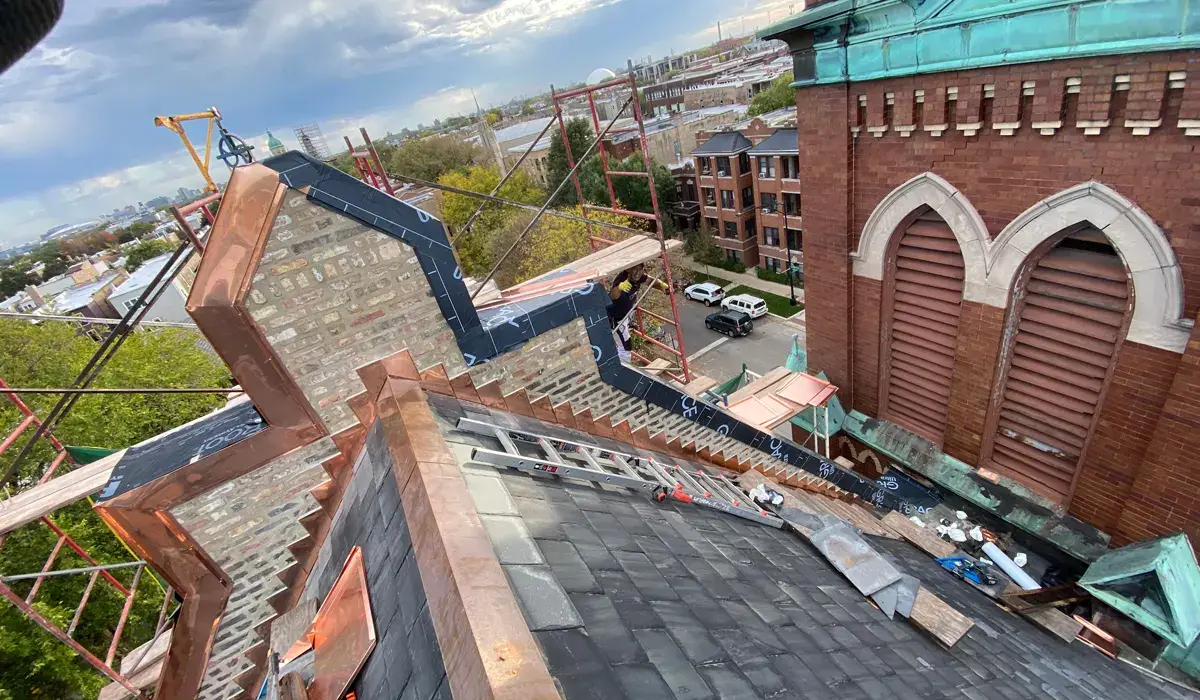
What a roof replacement costs in the Arlington Heights area
Priced by the square foot, a standard asphalt shingle replacement in the Chicago area generally runs $5.50 to $7.00 per square foot installed — materials, labor, tear-off, and disposal included.
Roofers also price by the “square” (one square = 100 square feet of roof). Asphalt in this area typically runs about $560 to $765 per square, depending on whether you choose basic 3-tab, architectural, or premium shingles.
Quick answer
Cost by roofing material
Material is the single biggest lever on price. Here’s how the common options compare, installed, in Illinois and the Chicago area:
Material
Installed cost / sq ft
Typical lifespan
Asphalt shingles
$4.50–$7
20–30 years
Standing seam metal
$8–$14
40–70 years
Clay / concrete tile
$10–$20
50–100 years
Slate
$15–$30
75–100+ years
Copper
$20–$40+
100+ years
Installed U.S. / Chicago-area ranges (2025–2026) from This Old House, HomeAdvisor, and Chicago roofing pricing — for planning, not a quote. Copper is a premium tier and varies widely by project.
The pattern is worth sitting with: the cheaper materials cost less today, the premium ones last two to five times longer. A metal, slate, or copper roof is a bigger check up front but often the cheaper choice measured over 40 years — because you buy it once. We break down which material fits which home in our guide to the best roofing materials for Arlington Heights.
What actually drives your price
Two homes on the same street can get very different numbers. Here’s why:
- Roof size and pitch — more square footage costs more, and a steep roof is slower and riskier to work, which raises labor.
- Material — see the table above; this is the biggest single factor.
- Tear-off — removing the old roof (sometimes two layers) and hauling it away is real labor and disposal cost.
- Decking condition — if the wood underneath is rotted, it has to be replaced before the new roof goes on. This is the classic “surprise,” and an honest roofer flags the possibility up front.
- Complexity — chimneys, skylights, dormers, valleys, and custom flashing all add work. This is exactly the metalwork we fabricate in-house rather than piecing together from off-the-shelf parts.

How much of the cost is materials?
Less than most people expect. On a typical asphalt job, the shingles and materials are roughly 40% of the total — the rest is labor, tear-off, disposal, permits, and any decking repairs. Labor alone tends to run about $150 to $300 per square.
That’s why “just the materials” pricing you find online is misleading: a pile of shingles in your driveway isn’t a roof. What you’re paying for is the install — and on a roof, the install is what determines whether it lasts 15 years or 40.
When is the cheapest time of year to get a new roof?
Quick answer
Demand drives roofing prices, and demand is lowest in the cold months. Roofers are busiest in summer and early fall, so quotes are often softer in late fall and winter — off-season savings can run around 10–20%.
There’s an Illinois catch, though. Asphalt shingles need temperatures around 45–50°F to seal properly, and installation isn’t recommended below 40°F. So the deepest discounts show up in deep winter, but the best balance of price and installation weather usually lands in the shoulder seasons — late fall and early spring. If you can plan ahead instead of replacing in an August emergency, you’ll usually pay less.

Why the cheapest quote usually isn't the best value
Here’s the part we’ll always tell you straight: the lowest number on the page is rarely the best deal.
A quote well below the others usually means one of three things — cheaper materials, a skipped step like a full tear-off or new underlayment, or a subcontractor being paid too little to do careful work. You find out which one about two winters later, when the leak shows up.
What you want isn't the cheapest bid — it's an itemized one. No surprises, no hidden costs.
A good estimate spells out the material, the scope, whether the old roof is being torn off, what’s being done about ventilation and flashing, and what’s warranted. If a contractor won’t put that in writing, that tells you something. We cover how to vet a roofer in our checklist for choosing a contractor.
The only way to get a real number
Every range on this page is a planning tool. The only accurate price is one measured against your roof — its size, pitch, condition, and the material you choose.
Black Square has replaced roofs across Arlington Heights and the northwest suburbs since 2007. We’ll measure your roof, walk you through the options honestly, and give you an itemized estimate with no upsells and no pressure — just a clear picture of what your roof needs and what it costs. Every job is backed by our 10-year warranty on labor and materials.